
EPDM Rubber Roofing Systems for Pennsylvania Commercial Buildings
EPDM has been the industry standard for flat roofs for decades because it is cost-effective, durable, and flexible in Pennsylvania’s harsh climate. But long-term performance depends on more than the membrane alone. We help facility owners compare traditional rubber roofing with high-performance options based on leak risk, maintenance, and ROI.
- Manufacturer-Certified Installers
- $16M Liability & Umbrella Coverage
- Serving All of Pennsylvania Since 2011
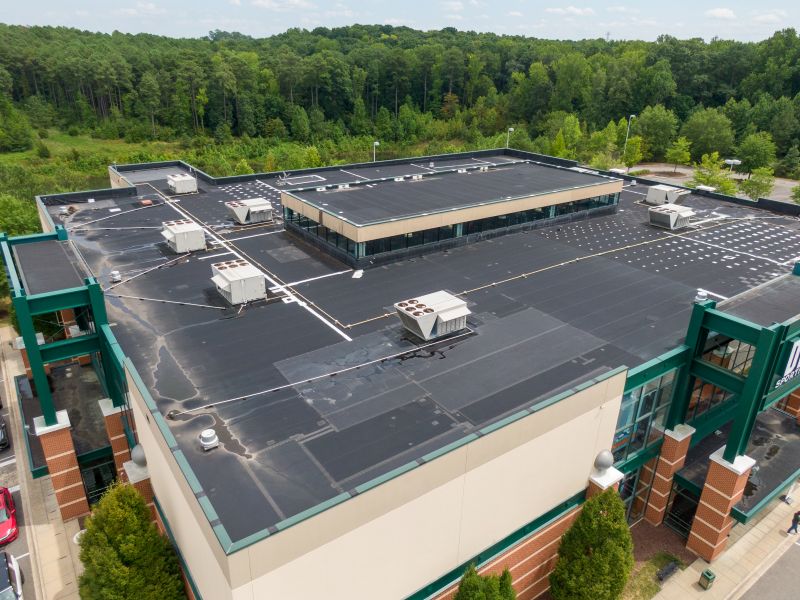
Why Consider EPDM for Your Flat Roof Replacement?
EPDM remains one of the most widely installed flat roofing systems because it performs well in the cold northeast climate and offers a lower upfront cost for large buildings.
Performs in Freezing Temperatures
Sub-Zero Pliability: Unlike some thermoplastic materials that can become brittle, synthetic rubber remains flexible in PA’s harshest freeze-thaw cycles.
Lower Upfront Cost
Cost-Effective Coverage: For massive industrial footprints, EPDM often provides the lowest “price-per-square-foot” for a full tear-off and replacement.
Proven Long-Term System
UV & Weather Resistance: High-quality rubber membranes are naturally resistant to ozone and long-term sun exposure.
The Real Failure Point in EPDM Roofing — It’s the Seams
While EPDM membranes can last 20+ years, rubber roofing is not a monolithic (single-piece) system. It is installed in large sheets that are joined together with adhesive seam tape.
In Pennsylvania, the extreme expansion and contraction of the roof deck puts immense stress on these glued seams. Over time, the adhesive dries out, becomes brittle, and pulls apart.
This is the #1 cause of leaks in commercial flat roofing.
That’s why we take a “beyond rubber” approach when evaluating flat roofing systems — especially in high-demand or leak-sensitive environments.
Where Leaks Actually Start
Membrane
Lasts 20+ Years
Seams
Fail Over Time
Seam Failure = Most Common Leak Source
EPDM vs. Custom-Fabricated PVC: Which is Better for Your ROI?
If your facility houses high-value inventory, sensitive electronics, or requires zero downtime, we often recommend comparing a traditional rubber roof to a custom-fabricated PVC system (like Duro-Last). EPDM remains a viable option for certain applications, particularly where upfront cost is the primary concern.
EPDM (Rubber)
Seam Strength
Glued/Taped (Weak Point)
Chemical Resistance
Low (Oils/Grease damage it)
Energy Efficiency
Low (Absorbs Heat)
Installation
High On-Roof Labor
Maintenance
Requires regular seam checks
Custom PVC (Duro-Last)
Seam Strength
Heat-Welded (Monolithic)
Chemical Resistance
High (Ideal for Manufacturing)
Energy Efficiency
Reflects 85%+ of Sun
Installation
Prefabricated in Factory
Maintenance
Minimal Maintenance
Pennsylvania Energy Compliance: Why Reflectivity Wins
Modern PA Building Codes require strict R-30 insulation values for all flat roof replacements. This thick layer of insulation effectively prevents a black ‘rubber’ roof from providing any heating benefit during the winter.
However, in the summer, that same black roof becomes a heat magnet, reaching temperatures (up to 150°F) that can degrade your membrane and spike your cooling costs.
Black roofs don’t save energy — they trap heat.
Some facility managers believe a black EPDM roof is better for Pennsylvania because it ‘absorbs heat’ in the winter. In reality, with PA’s short winter days, thick roof insulation, and frequent snow cover, that benefit is negligible. Data from the EPA and the Global Cool Cities Alliance confirms that for northern climates like Pennsylvania, the summer cooling savings and reduced HVAC ‘peak demand’ of a reflective white roof significantly outweigh any potential winter heating benefits.
Meeting PA Energy Standards
White PVC systems exceed reflectivity requirements for modern commercial and industrial buildings.
Reducing Peak Demand
Lower roof temperatures reduce strain on HVAC systems during high-cost summer hours.
Protecting Your Insulation
Reducing thermal shock helps prevent insulation warping and long-term system failure.
Our 3-Step Flat Roofing Evaluation
We don’t believe in “one-size-fits-all” roofing. When you contact 768 Roofing for an estimate, we perform a deep-dive audit of your current system:
01
Core Sampling
We inspect insulation and decking conditions to determine whether a full replacement is required or if restoration is possible..
02
Advanced Leak Detection
We identify trapped moisture and hidden leaks that visual inspections often miss.
03
Solution Comparison
You receive a clear breakdown of EPDM vs PVC options so you can choose based on long-term performance and budget.
Serving All of Pennsylvania with Integrity
768 Roofing is a fully insured and manufacturer-certified contractor delivering industrial-grade flat roofing systems across Pennsylvania.
Manufacturer Certified
We install top-tier EPDM and PVC systems from leading manufacturers.
$16M Liability Coverage
Your project is protected with industry-leading insurance coverage.
Pennsylvania Expertise
We build roofing systems specifically designed for local climate conditions.
Service Area
Based in Clearfield, PA — serving commercial facilities across the region:
Altoona
Wellsboro
New Castle
Pottsville
Indiana
Lebanon
Williamsport
Pittsburgh
Harrisburg
State College
Pennsylvania Commercial Roofing: Energy & Code Q&A
Common questions from Pennsylvania building owners about energy performance, roofing systems, and code requirements.
Does a black rubber roof help heat my building during Pennsylvania winters?
This is a common misconception. When temperatures are lowest, roofs in Pennsylvania are often covered in snow or frost, which acts as insulation and reflects sunlight away from the membrane.
Additionally, modern building codes require high insulation levels (R-30), preventing surface heat from reaching the interior. In practice, black roofs only generate heat when it’s least beneficial — during warmer months.
What are the current energy laws for commercial roof replacement in Pennsylvania?
Pennsylvania has adopted the 2021 International Energy Conservation Code (IECC). This law requires that any full “tear-off” and flat roof replacement must be brought up to current thermal resistance standards (typically a minimum of R-30). Because this insulation layer is highly effective, roof color has little impact on heating costs — but it significantly affects cooling efficiency and HVAC performance.
Will a white PVC roof actually save money in Pennsylvania’s climate?
Yes, primarily through Peak Demand reduction.
While PA isn’t “hot” year-round, our summer humidity spikes cause HVAC units on black EPDM roofs (which can hit 150°F) to “redline” to keep up. White PVC stays roughly 50–60 degrees cooler than rubber. This prevents expensive electrical demand spikes and reduces the mechanical wear and tear on your rooftop units, extending their service life by years.
Are there rebates available for energy-efficient roofing systems in Pennsylvania?
Many utility providers in Pennsylvania, including PPL, PECO, and FirstEnergy, offer incentives under Act 129 for energy-efficiency improvements.
Installing a reflective roofing system like PVC may qualify your project for rebates. We provide the required documentation to help support your utility application and maximize ROI.
Get a Roof That Performs Long-Term
Schedule a free evaluation and get a clear breakdown of your options — whether you’re planning a full replacement or dealing with an active leak.
Fully Insured • $16M Liability Coverage • Serving Pennsylvania Commercial Clients